

Running in Pregnancy
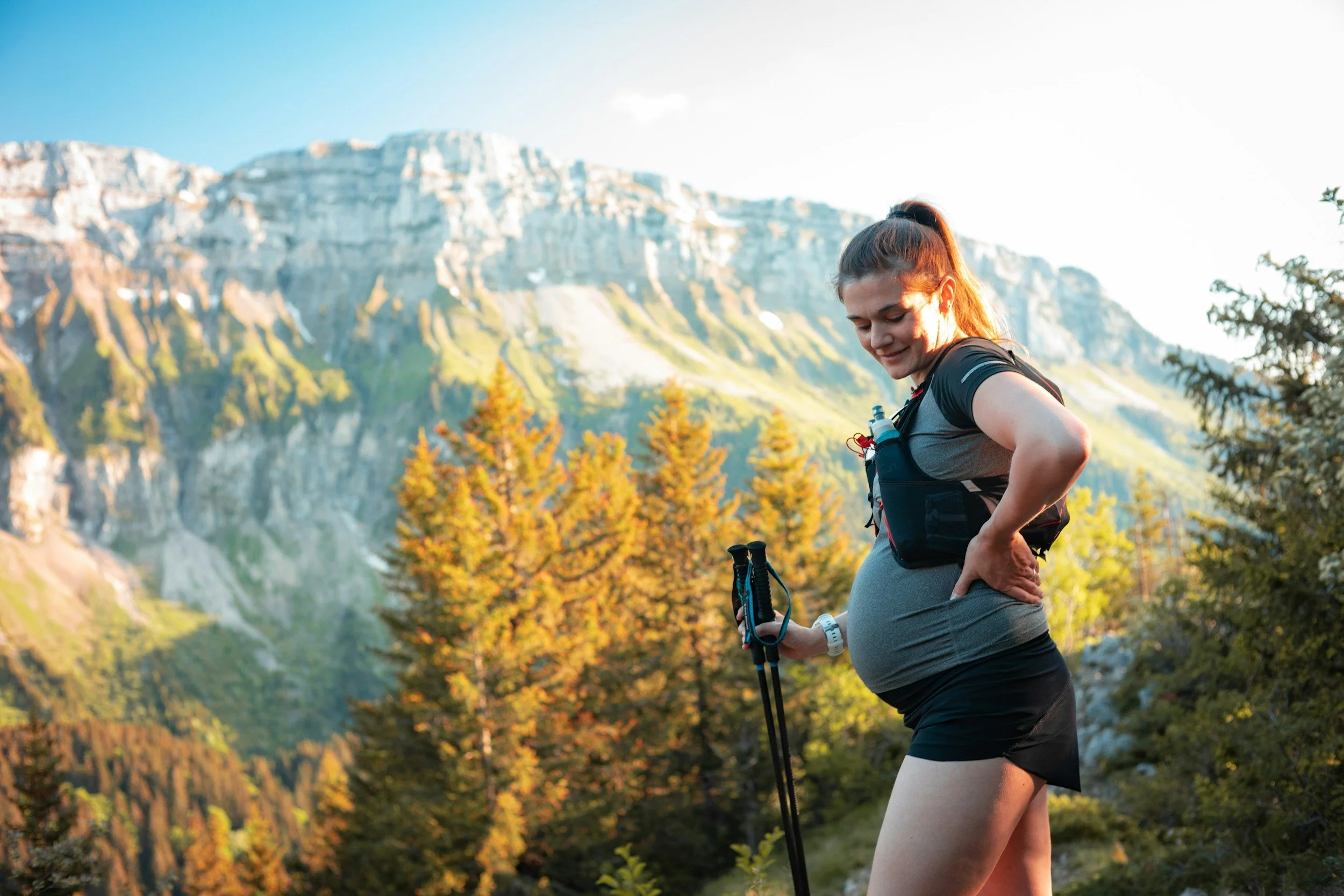
By Caitlin Daley (Physiotherapist, Post Grad. Certificate in Pelvic Floor Physiotherapy).
Many of our clients experience barriers to exercise during their pregnancy such as: nausea, vomiting, extreme fatigue, reflux, pelvic pain, insomnia (just to name a few…)
Pregnancy can be extremely tough on some, while others feel relatively normal.
For those curious, or keen to run during their pregnancy - this blog post aims to provide you with an overview with some of the research available on this topic.
Before considering running, please note that running is not recommended for women who have not run prior to pregnancy. Running is a high impact, cardiovascular form of exercise, that is usually performed to moderate or vigorous intensity (15-16/20 Borg Scale of Perceived Exertion) (RANZCOG, 2023).
The Australian Guidelines on Exercise in Pregnancy recommends 150 minutes of moderate intensity (or in those previously exercising at higher intensities) 75 minutes of vigorous intensity exercise per week, plus 2 x strength training days.
Women should consult with their health care provider to ensure they have low-risk/uncomplicated pregnancy, and that running is safe for them.
1/ Recreational Running during pregnancy was not associated with low birth weight, or pre-term labour.
This retrospective study by Kuhrt & colleagues looked at results from 1293 recreational runners (using Park Run database). Data suggests that women who continued to run during their pregnancy did not experience an increased incidence of low birth weight or pre-term labour.
Runners did have more assisted vaginal deliveries, which could suggest running may increase pelvic floor tone, leading to obstruction during second stage of labour- however, this isn’t proven as this study was retrospective (low-quality), and we cannot draw causation from its results.
Katy Kuhrt, Mark Harmon, Natasha L Hezelgrave, Paul T Seed, Andrew H Shennan. 2018. Is recreational running associated with earlier delivery and lower birth weight in women who continue to run during pregnancy? An international retrospective cohort study of running habits of 1293 female runners during pregnancy. http://dx.doi.org/10.1136/ bmjsem-2017-000296).
2/ Running Biomechanics in Pregnancy are Different to non-pregnant people
This case control study examined 16 pregnant clients, and 16 non-pregnant clients. Gait analysis and muscle activity (measured via EMG) was measured during second and third trimester, and postpartum.
Results found differences in trunk and pelvic rotation, reduced gluteal muscle activation, and increased erector spinae muscle activity in pregnant clients.
Postpartum clients demonstrated increased hip adduction, knee abduction and a more rigid and upright trunk, suggesting weakness in stabilising muscle groups such as glutes and core.
These findings are significant and may influence likelihood of developing musculoskeletal pain in pregnancy or postpartum, and also highlight the need for Physiotherapy support when returning to running postpartum.
Jennifer J. Bagwell a,* , Elizabeth Avila b , Nicholas Reynolds c , Jo Armour Smith d , Kevin Valenzuela b , Dimitrios Katsavelis. 2024. Running biomechanics differ during and after pregnancy compared to females who have never been pregnant. Doi:https://www.sciencedirect.com/science/article/pii/S096663622400047X?via%3Dihub
3/ Participation in Running during Pregnancy
James et al., 2022 paper investigated why participation in running decreases during pregnancy and postpartum.
883 women completed an online survey; results showed that women did not run during pregnancy for the following reasons: fear of miscarriage, nausea, fatigue, anxiety, nervousness.
Women did not return to running in postpartum due to the following factors: symptoms or pain associated with medical complications postpartum, fear regarding pelvic health such as leaking urine, vaginal heaviness, and not knowing how to return safely.
This paper highlighted the need for better education and support for women during their antenatal, and postnatal periods to ensure they feel supported to engage in exercise.
Megan L. James, MSc, BSc (Hons)1 Isabel S. Moore, PhD, BSc (Hons)1 Gráinne M. Donnelly, PT, BSc (Hons), PgC2,3,4,5 Emma Brockwell, PT, BSc (Hons)4,5,6 Joanna Perkins, PT, MSc, BSc (Hons)7 Celeste E. Coltman, PhD, BSc (Hons)8. Running During Pregnancy and Postpartum, Part A: Why Do Women Stop Running During Pregnancy and Not Return to Running in the Postpartum Period?. DOI: 10.1097/JWH.0000000000000228.
If you found this blog helpful, or you have further questions about running in pregnancy please reach out to us via email here
References:
Australian Government Department of Health, Disability and Ageing. 2026. Recommendations for Pregnancy. https://www.health.gov.au/topics/physical-activity-and-exercise/pregnancy?language=en
Jennifer J. Bagwell a,* , Elizabeth Avila b , Nicholas Reynolds c , Jo Armour Smith d , Kevin Valenzuela b , Dimitrios Katsavelis. 2024. Running biomechanics differ during and after pregnancy compared to females who have never been pregnant. Doi:https://www.sciencedirect.com/science/article/pii/S096663622400047X?via%3Dihub
Katy Kuhrt, Mark Harmon, Natasha L Hezelgrave, Paul T Seed, Andrew H Shennan. 2018. Is recreational running associated with earlier delivery and lower birth weight in women who continue to run during pregnancy? An international retrospective cohort study of running habits of 1293 female runners during pregnancy. http://dx.doi.org/10.1136/ bmjsem-2017-000296).
Megan L. James, MSc, BSc (Hons)1 Isabel S. Moore, PhD, BSc (Hons)1 Gráinne M. Donnelly, PT, BSc (Hons), PgC2,3,4,5 Emma Brockwell, PT, BSc (Hons)4,5,6 Joanna Perkins, PT, MSc, BSc (Hons)7 Celeste E. Coltman, PhD, BSc (Hons)8. Running During Pregnancy and Postpartum, Part A: Why Do Women Stop Running During Pregnancy and Not Return to Running in the Postpartum Period?. DOI: 10.1097/JWH.0000000000000228.
Royal Australian and New Zealand College of Obstetrics and Gynaecology (RANZCOG). 2023. Exercise in Pregnancy. https://ranzcog.edu.au/wp-content/uploads/Exercise-During-Pregnancy-Guidance.pdf